Thursday, March 3, 2011

Political Structure

Presidential System:
President Dilma Rousseff

Bicameral Legislature:
Congress--> Senate and Chamber of Deputies

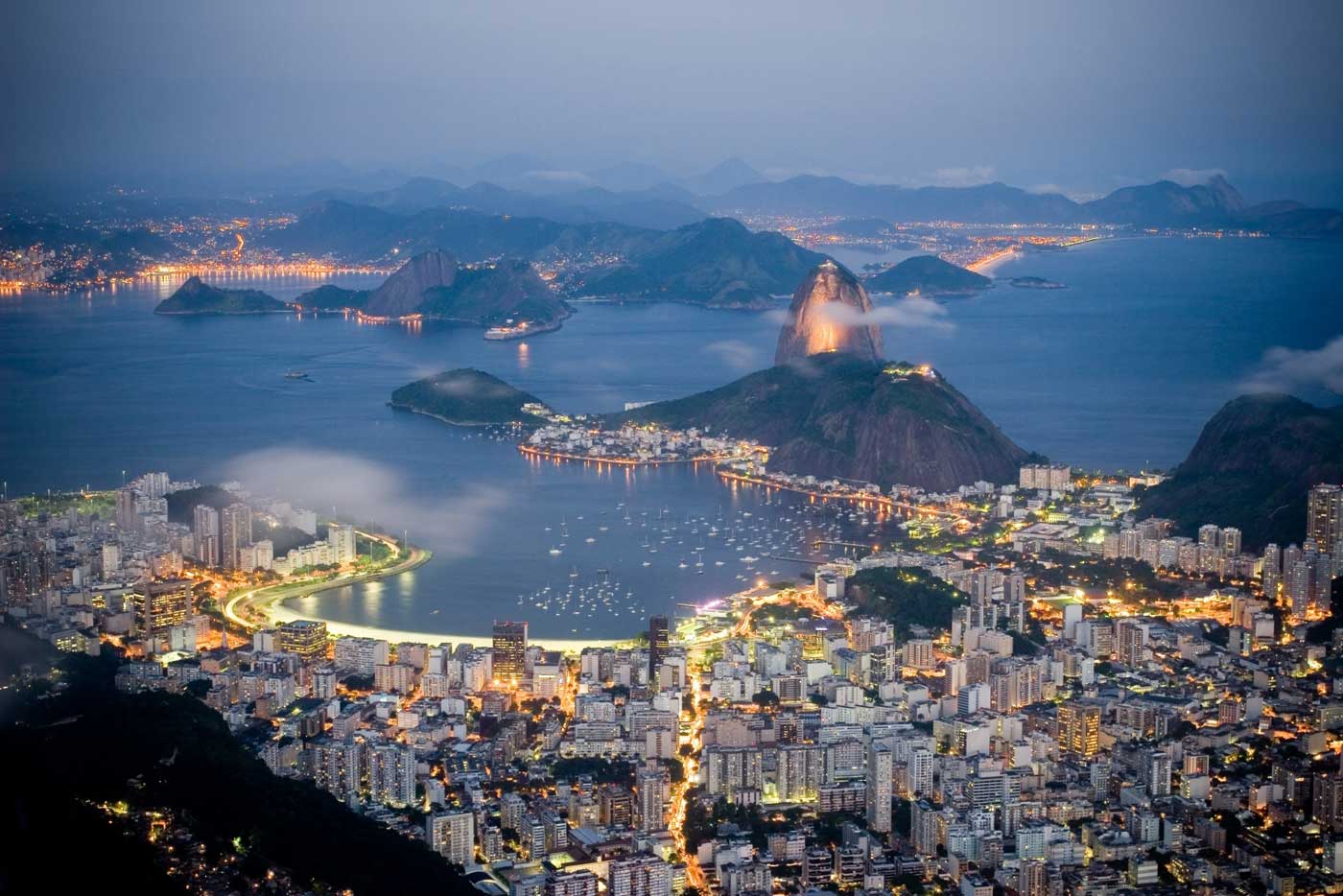
Governors in Federal Districts: includes Legislative Assemblies for each region (26 states in the Federal District--Rio de Janeiro)

Local Governments:
Mayors and City Counsels

Almonds, Gabriel A., G. Bingham Powell Jr., Russell J. Dalton, Kaare Strom. Comparative Politics Today: A World View. New York: Longman, 2010. p. 512.

Demographics

Population

201,103,330
note: Brazil conducted a census in August 2000, which reported a population of 169,872,855; that figure was about 3.8% lower than projections by the US Census Bureau, and is close to the implied underenumeration of 4.6% for the 1991 census (July 2010 est.)

Age structure

0-14 years: 26.7% (male 27,092,880/female 26,062,244)
15-64 years: 66.8% (male 65,804,108/female 67,047,725)
65 years and over: 6.4% (male 5,374,230/female 7,358,082) (2010 est.)

Median age

total: 28.9 years
male: 28.1 years
female: 29.7 years (2010 est.)

Population growth rate

1.166% (2010 est.)

Birth rate

18.11 births/1,000 population (2010 est.)

Death rate

6.35 deaths/1,000 population (July 2010 est.)

Net migration rate

-0.09 migrant(s)/1,000 population (2010 est.)

Urbanization

urban population: 86% of total population (2008)
rate of urbanization: 1.8% annual rate of change (2005-10 est.)

Sex ratio

at birth: 1.05 male(s)/female
under 15 years: 1.04 male(s)/female
15-64 years: 0.98 male(s)/female
65 years and over: 0.73 male(s)/female
total population: 0.98 male(s)/female (2010 est.)

Infant mortality rate

total: 21.86 deaths/1,000 live births
male: 25.39 deaths/1,000 live births
female: 18.15 deaths/1,000 live births (2010 est.)

Life expectancy at birth

total population: 72.26 years
male: 68.7 years
female: 76 years (2010 est.)

Total fertility rate

2.19 children born/woman (2010 est.)

Ethnic groups

white 53.7%, mulatto (mixed white and black) 38.5%, black 6.2%, other (includes Japanese, Arab, Amerindian) 0.9%, unspecified 0.7% (2000 census)

Religions

Roman Catholic (nominal) 73.6%, Protestant 15.4%, Spiritualist 1.3%, Bantu/voodoo 0.3%, other 1.8%, unspecified 0.2%, none 7.4% (2000 census)

Languages

Portuguese (official and most widely spoken language); note - less common languages include Spanish (border areas and schools), German, Italian, Japanese, English, and a large number of minor Amerindian languages

Literacy

definition: age 15 and over can read and write
total population: 88.6%
male: 88.4%
female: 88.8% (2004 est.)

School life expectancy (primary to tertiary education)

total: 14 years
male: 14 years
female: 14 years (2008)

Education expenditures

5.2% of GDP (2007)

http://www.indexmundi.com/brazil/demographics_profile.html

Wednesday, March 2, 2011

Brazilian History

In the early 16th century, the Portuguese, led by explorer Pedro Cabral, landed in what is modern brazil. The Portuguese began their exploration in search of goods for European trade and land to improve their economic statuses in Portugal. The majority of the explorers were less interested in territorial dominion and more interested in making a profit back in Europe. However, when sugar reached Brazil, the Portuguese began to import slaves and the land was colonization began in 1534 under Dom Joao III. Rio de Janeiro was captured from the French in 1567 and Sau Luis in 1615. Sugar exports began to decline at the close of the 17th century, which led to Portuguese discovery and lucrative trade of gold in the region called Minas Gerais.

In 1807, Napoleon Bonaparte of France invaded the capitol of Portugal, Lisbon. The Portuguese government reestablished the seat of the empire across the Atlantic Ocean in Rio de Janeiro. King Joao VI returned to Lisbon in 1821 and relinquished his rule of Brazil to his son Prince Pedro. The Portuguese government attempted to return Brazil to its colonial state, but Prince Pedro, alongside the Brazilians, opposed this decision. On September 7, 1822, Brazil became an independent country and on October 12, 1822, Prince Pedro became the first emperor of Brazil and his coronation was held on December 1, 1822. The Monarchy was overthrown in 1889, although Pedro II remained the head of state.

The early republic was equivalent to a military dictatorship headed by Pedro II, but the 1930s weakened this long standing regime. Getulio Vargas led a revolution and overthrew President Washingont Luis and established himself as president. In 1937, Brazil transformed into a full dictatorship under Vargas; but he was overthrown in 1945 at the end of World War II and General Eurico Dutra was elected and assumed presidency in 1946. However, this was short-lived and Vargas gained control again in 1951. He was unable to govern properly with an active democracy and committed suicide in 1954.

Since then, Brazil has become and returned from dictatorships. The current and 36th president of Brazil is Dilma Rousseff; she assumed office on January 1, 2011 and is the first woman to hold the title of president in Brazil.


Monday, February 7, 2011

Brazil's Two Largest Cities


SAO PAULO


POPULATION: APPROX. 11.2 MILLION


RIO DE JANEIRO


POPULATION: APPROX. 6.3 MILLION

Geography/Economic Geo

The climate and geography of Brazil is vast; the "Amazon River system carries more water to the ocean than any other river system in the world" (Rosenburg). The basin and Amazon jungle are home of the most rapidly diminishing rainforest in the world. Sixty percent of Brazil is covered by the rainforest, which is why the country is very humid and has a tropical/subtropical climate. While most of the country has a wet climate, the eastern highlands and plateaus suffer from frequent droughts. The highest point in the Brazilian highlands is Pico de Nablina, whose summit is at 9888 feet.

The most populous state of Brazil is Sao Paulo and Rio de Janeiro, the cultural and international transportation capital, is the second; however, the capital is Brasilia. The population of Sao Paulo has "doubled since 1977" and continues to grow. Sao Paulo also retains half of Brazil's GDP and two-thirds of the country's manufacturing. Roughly a third of the world's coffee production comes from Brazil. The country is also known for its citrus, cattle, iron ore, and sugar cane production, although the chief industry of Brazil is automobile production.

Rosenburg, Matt. "Geography of Brazil." Web.

Search This Blog